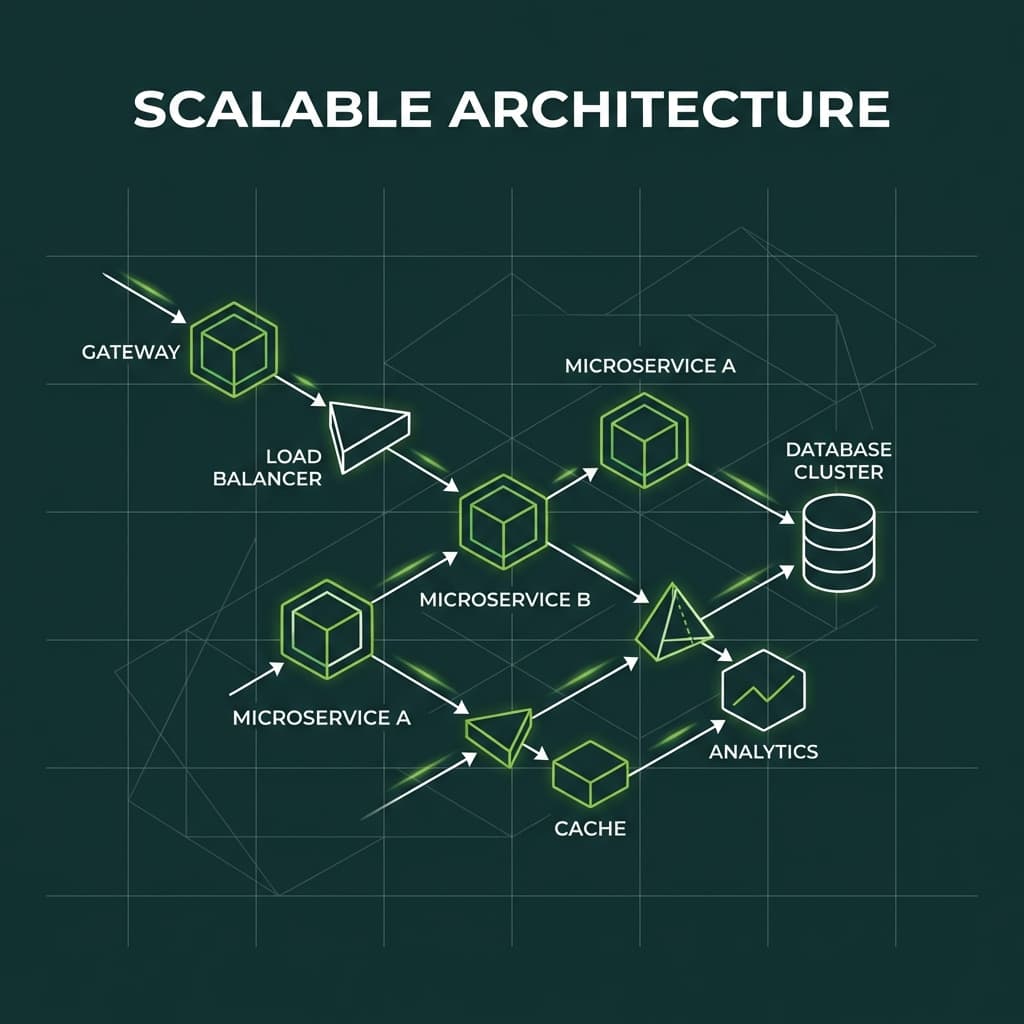
Scaling Without Losing Your Soul: Lessons from Orb21
In the startup world, "scale" is a dangerous word. It conjures images of massive server farms, complex flowcharts, and teams of hundreds. But at Orb21, we learned the hard way that true scale isn't about how many requests your server can handle—it's about how much complexity your mind can handle.
When we were building our first few products, we fell into the trap everyone falls into. We wanted to build the "perfect" system. We drew diagrams that looked like spaghetti. We worried about what would happen if we suddenly got a million users overnight. Spoiler alert: we didn't.
What we did get was burnout.
The Cognitive Cost of Complexity
Every time you add a new moving part to your business—whether it's a new software tool, a new department, or a new protocol—you are paying a tax. It's not just a financial tax; it's a cognitive tax. You have to remember how it works. You have to fix it when it breaks.
We realized that our biggest bottleneck wasn't technology. It was us. We were drowning in our own cleverness.
So we made a radical decision: Simplify everything.
If a process took three steps, we asked if it could take one. If we were using five different tools to manage our projects, we cut it down to one. We stopped trying to build for the imaginary future and started building for the reality of today.
The "Pizza Shop" Philosophy
Think about a really good local pizza shop. They don't have a complex supply chain algorithm. They don't have an AI-driven marketing department. They have flour, water, tomatoes, and cheese. They have an oven. And they focus on making the best damn pizza possible, every single day.
That's how we run Orb21 now.
We treat our business like a craft. We focus on the raw ingredients—great ideas, clear communication, and solid execution. We don't hide behind jargon or complex systems.
When Simple Becomes Powerful
The funny thing is, once we stopped trying to look "scalable," we actually started growing faster.
Why? Because simple things are resilient. Simple things are easy to fix. Simple things are easy to explain to new team members.
- Decision Fatigue: Gone. We have fewer choices to make because our systems are constrained.
- Speed: We ship faster because there's less "process" standing in the way of "done".
- Clarity: Everyone knows what the goal is. There's no ambiguity.
Conclusion: Build for Sanity
If you're building a company, don't build it for the cover of a tech magazine. Build it for yourself. Build it so you can sleep at night. Build it so you can go on vacation without checking your email every hour.
Scale will come. But if you build a monster to get there, the monster will eventually eat you. Build a bicycle instead. It might not look as impressive as a rocket ship, but you can pedal it forever.